24 Mar 2026

Easter, or Semana Santa in Peru, is a unique combination of traditional customs and Spanish colonial history that has created a distinctive set of rites throughout Peru. Some of the top celebrations have been awarded the status of 'Cultural Heritage of the Nation' and offer a stirring look into the religion and cultural syncretism of Andean and Catholic traditions commemorating life, death and rebirth.
Ayacucho
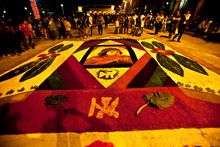
There is no better town to visit for Easter then Ayacucho, home to 33 churches representing each year of Jesus' life. With nine days of festivities the Easter celebrations hold status as 'Cultural Heritage of the Nation' for good reason. Beginning on Good Friday, across the city thousands of people participate in the Way of the Cross enactment by local actors. The local community also create beautiful Alfombras de Flores, stunning murals on the ground designed with flowers and chalk.
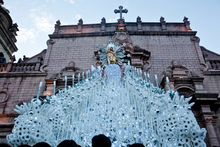
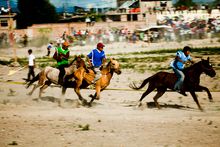
The energy of the festivities reaches its peak on the Saturday, beginning with a race and series of equestrian displays featuring the famous Peruvian Caballos de Paso, followed by brass bands, fireworks and dancing until late in the evening. Then, on Easter Sunday, before dawn, hundreds of people carry the Candelaria where a resurrected Christ sat atop a pyramid shaped float adorned with thousands of candles out of the cathedral through a huge procession accompanied by ringing bells and more fireworks, it is a moving end to an incredibly busy week.
Cusco
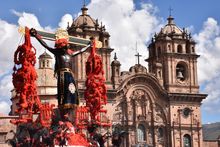
Cusco is not just a gateway to Machupicchu but is also an incredibly important place for the Easter period in Peru. The celebration on Holy Monday is hugely symbolic of Peru's unique ability to combine and integrate local indigenous culture. The procession features a representation of Christ on a crucifix, also known as the Taytacha de los Temblores, which was created in 1620 and has been seen as a protector of Cusco, lessening the destruction of the earthquake in 1650.
Along the procession route, participants scatter Ñuqchu flowers - traditional red Andean blooms believed to offer protection - while musicians play pututus, ancestral instruments crafted from large conch shells. The ceremony is also accompanied by the culturally significant Las Ch'áynas of Cusco, a choir whose songs blend Incan lyrics with Catholic devotion, enriching the spiritual atmosphere of the event. During this period, twelve symbolic dishes are prepared by traditional methods - with each dish representing one of the twelve apostles. The selection includes six savoury and six sweet preparations, many of which can be found in local markets such as San Pedro and San Blas. Typical dishes include:
- Pescado frito - a dish featuring locally caught fried fish, such as trout, served with corn, rice, potatoes, and salad.
- Capchi de Habas - a comforting stew of beans, potatoes, milk and cheese.
- Dulce o Guiso de Durazno - peeled peaches gently poached and served in a fragrant syrup infused with cloves, cinnamon, and chancaca (raw cane sugar).
- Pan chuta - a traditional artisanal bread from the Cusco region, known for its large size and distinctive preparation.
These culinary traditions, combined with music, ritual, and symbolism, form an integral part of the celebration's cultural identity.
Arequipa
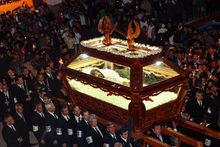
In Arequipa, the mood is similarly celebratory and reverent, with various religious expressions such as the procession of the Holy Sepulchre, which is the most solemn observance of Good Friday, as it moves through the Historic Center with the image of the Reclining Christ and the Virgin of Sorrows. Also noteworthy is a tradition recognized as Intangible Cultural Heritage of the Nation in the district of Pampacolca, located in the province of Castilla, where locals prepare the so-called “monte altares”, whose decorative elements refer to a celebration of fertility and abundance. On Sunday, effigies representing Judas Iscariot or politicians are burned in public spaces as an act of purification from sin with people gathering around to sing and dance.
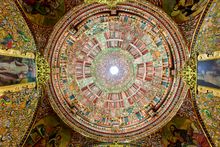
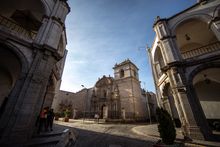
The city is a beautiful place to spend the Easter period, surrounded by the colonial architecture constructed from sillar - a whitish stone from which the city gets its “White City” moniker. The Church of La Compañía de Jesús is a gorgeous small baroque church, with the adjoining San Ignacio Chapel that has an incredible polychrome cupola adorned with murals featuring jungle motifs such as tropical flowers, fruits, and birds alongside more traditional angels.
For further destination information and to plan your trip, visit www.peru.travel
Please find more images here
-ENDS-
For more press information, please contact Barry Johnston barry@goshpr.co.uk, Naomi Man naomi@goshpr.co.uk or promperu@goshpr.co.uk